Free online tool • Two layers at once
Sand and Gravel Calculator
This sand and gravel calculator works out both layers under a paver patio, walkway, flagstone path or paver driveway in one go: the compacted gravel base and the bedding sand on top. Enter the area, pick the project and materials, and get tons, cubic yards and cost for each.
How Much Sand and Gravel Do I Need?
Why Pavers Need Both Sand and Gravel
A paver or flagstone surface sits on two different layers that do two different jobs. The gravel base — usually 4 to 10 inches of compacted crusher run or paver base — carries the load and keeps frost and soft soil from moving the surface. The bedding sand — a thin 1 inch screeded layer — gives each paver a flat, adjustable seat. Ordering one without the other leaves a job half-done, which is why the sand and gravel calculator works out both at once.
Sand and Gravel Depth by Project
| Project | Gravel base | Sand layer |
|---|---|---|
| Paver patio | 4–6 in | 1 in |
| Paver walkway | 4 in | 1 in |
| Paver driveway | 8–12 in | 1 in |
| Flagstone patio | 4 in | 1–2 in |
| Brick path | 4 in | 1 in |
Keep the sand at about 1 inch. A thicker sand layer does not make the surface stronger — it lets pavers rock and settle unevenly. Make up any extra height with more gravel instead.
Choosing the Gravel
Crusher run and paver base
Dense-graded gravel with fines that compacts into a firm, stable layer. This is the standard base gravel under pavers and flagstone, at about 1.45 to 1.50 tons per cubic yard.
#57 stone
Clean, open-graded gravel used under permeable pavers, where water has to drain through the base. Pair it with a smaller clean stone such as #8 chips instead of sand on top.
Choosing the Sand
- Concrete sand — coarse, sharp sand and the usual paver bedding sand. It drains well and holds a screeded line.
- Masonry sand — finer and softer; better for mortar and joint filling than for bedding.
- Stone dust — the fine screenings from crushing stone. It packs hard but holds water, so many installers prefer concrete sand for bedding.
- Fill sand — cheap sand for raising grade or backfilling, not for bedding pavers.
How the Sand and Gravel Calculator Works
1. Area
Multiply length by width. A 16 × 12 ft paver patio is 192 sq ft. Add 6 inches on each side if you want the gravel base to extend past the pavers, which most installers recommend.
2. Gravel volume and tons
Multiply the area by the gravel depth in feet and divide by 27: 192 × 0.5 ÷ 27 = 3.56 cubic yards. With 10 percent extra that is 3.91 cubic yards, × 1.50 = 5.9 tons of crusher run.
3. Sand volume and tons
Do the same for the sand: 192 × 0.083 ÷ 27 = 0.59 cubic yards, plus 10 percent = 0.65 cubic yards, × 1.35 = 0.9 tons of concrete sand.
4. Cost
The sand and gravel calculator multiplies each layer by its price per ton and adds them together. With the defaults this patio needs about $176 of gravel and $31 of sand, before delivery.
Sand and Gravel for Concrete
If you are mixing concrete rather than laying pavers, the proportions are different. A common general-purpose mix is about 1 part cement to 2 parts sand to 3 parts gravel by volume. One cubic yard of concrete takes roughly 1,200 to 1,400 lbs of sand and 1,900 to 2,200 lbs of gravel, plus five to six bags of cement. For more than a few cubic yards, ready-mix delivery is usually cheaper and more consistent than mixing your own.
Sand and Gravel Cost
Bulk gravel for a paver base runs about $25 to $45 per ton, and concrete sand about $30 to $50 per ton. Bagged paver base and paver sand from a home center cost $5 to $8 per 50 lb bag — five to eight times the bulk price — so bags only make sense for patios under about 50 square feet. Most stone yards deliver sand and gravel on the same truck if you order them together, saving a second delivery fee.
Related Gravel Calculators
These tools use the same volume and density maths for neighbouring jobs:
- Paver base calculator — base, sand, pavers and joint sand in one estimate
- Gravel base calculator — compacted base for any project
- Gravel pad calculator — pads for sheds, RVs and hot tubs
- Patio gravel calculator — gravel patios and their base
- Crusher run calculator — the usual base gravel under pavers
- Gravel compaction calculator — loose depth to spread for a compacted base
Base and bedding sand depths follow common segmental paving practice; the Interlocking Concrete Pavement Institute publishes the detailed installation guidelines.
Sand and Gravel FAQ
How much sand and gravel do I need for pavers?
For a paver patio, plan on 4 to 6 inches of compacted gravel base and 1 inch of bedding sand. A 16 by 12 ft patio needs about 5.9 tons of crusher run at 6 inches and 0.9 tons of concrete sand, including 10 percent extra.
How thick should sand be under pavers?
About 1 inch. Thicker sand lets pavers shift and settle unevenly, so make up extra height with more compacted gravel rather than more sand.
Which sand is best under pavers?
Coarse concrete sand is the standard bedding sand under pavers because it drains well and holds a screeded surface. Masonry sand is too fine for bedding, and stone dust holds water.
How much does a yard of sand and gravel weigh?
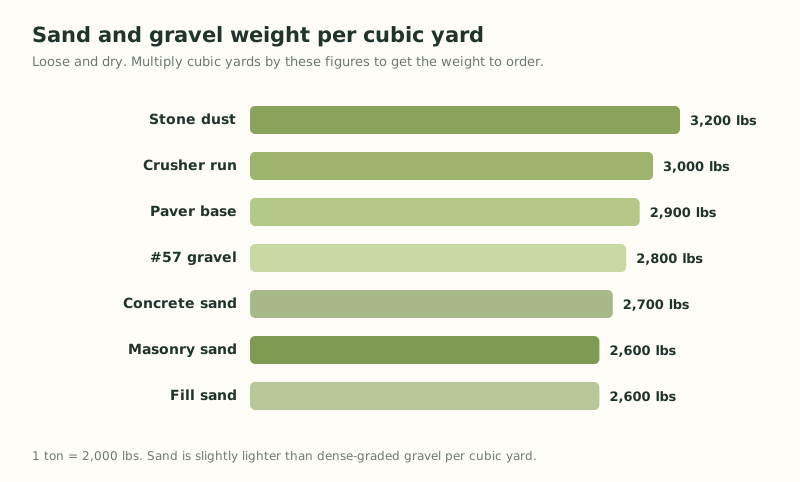
A cubic yard of concrete sand weighs about 2,700 lbs and a cubic yard of crusher run about 3,000 lbs, both loose and dry. Wet sand can be 10 to 20 percent heavier.
How much sand and gravel is in a yard of concrete?
One cubic yard of concrete contains roughly 1,200 to 1,400 lbs of sand and 1,900 to 2,200 lbs of gravel, plus cement and water, for a common 1:2:3 mix.