What problem does this tool solve?
It estimates how much drainage gravel fills a French drain trench without counting the space occupied by the pipe, then converts that volume to tons or tonnes and optional cost.
FREE ONLINE TOOL • PIPE VOLUME INCLUDED
This French drain calculator estimates the drainage stone a trench needs by subtracting the pipe volume from the total trench volume. Enter trench length, width, depth, and pipe diameter to get cubic yards, tons, and cost.
GUIDE Trench, pipe, stone and waste explained →TRENCH MEASUREMENTS
The calculator treats the pipe as a continuous cylinder and subtracts its volume from the stone-filled trench. It does not subtract filter fabric or fittings.
FRENCH DRAIN GRAVEL CALCULATOR GUIDE
This free online French drain gravel calculator estimates the net stone-filled trench volume after pipe displacement.
Method: rectangular trench volume minus cylindrical pipe displacement, then density and allowances. Last reviewed July 29, 2026.
It estimates how much drainage gravel fills a French drain trench without counting the space occupied by the pipe, then converts that volume to tons or tonnes and optional cost.
Use net cubic yards to check a volume-based quote, rounded tonnage to place an order, pipe displacement to review the calculation, and estimated cost for project budgeting.
Accuracy falls with irregular trenches, multiple pipes, fittings, large voids, sloped excavation, or nonuniform stone depth. The calculator does not design drainage capacity or verify local code compliance.
A regular gravel calculator treats the project as a solid stone volume. A French drain stone calculator subtracts the cylindrical pipe. A drainage calculator may estimate water flow instead of material quantity.
Calculate each pipe cylinder separately or ask a professional to verify the reduced stone volume.
Enter only the depth actually filled with stone and confirm the installation detail.
Ask the supplier for tons per cubic yard. The default is a typical estimate, not a product specification.
Compare waste, moisture, compaction, minimum order quantities, and the supplier's bulk density.
A French drain uses a perforated pipe surrounded by open-graded drainage stone to collect and redirect water. The calculator models the trench as a rectangular prism and the pipe as a cylinder. It subtracts the pipe displacement from the stone-filled trench volume, adds the selected waste allowance, and converts the remaining volume to weight with the entered stone density. This is more specific than a standard gravel estimate because a long pipe can displace a meaningful amount of aggregate. The model assumes one continuous, centered pipe and a consistent trench cross-section from beginning to end.
Measure the excavated inside width rather than the width of the shovel or machine bucket. Use the length of the stone-filled run and the depth that will actually contain aggregate. If the bottom slopes, take measurements at several points and use a careful average, or divide the trench into separate sections. Enter the outside pipe diameter, not the nominal label alone, when the manufacturer provides a different actual dimension. Do not include soil cover above the stone. If the design contains multiple pipes, catch basins, large fittings, cleanouts, or chambers, the simple cylinder deduction will not represent every displaced volume.
French drains generally rely on clean, washed, angular stone with open spaces that let water move toward the pipe. Fine material can reduce drainage performance, so the correct stone specification matters more than appearance. Ask the designer or local supplier for the required size and bulk density. Waste accounts for uneven trench walls, minor over-excavation, settlement, spillage, and supplier rounding. Ten percent is a common planning margin, but a machine-dug trench in unstable soil may need a different allowance. The calculator estimates quantity only; it does not decide stone grading, pipe slope, filter fabric, outlet location, or hydraulic capacity.
Share trench dimensions, pipe size, calculated cubic yards, rounded tonnage, and stone specification when requesting a quote. Confirm whether the supplier's weight includes moisture and whether delivery is limited by truck capacity or minimum load. Before excavation, identify buried utilities and verify where discharged water may legally go. A French drain that is undersized, lacks a suitable outlet, or is installed against local requirements may not solve the water problem even when the stone quantity is accurate. For foundations, retaining walls, severe erosion, or recurring indoor water, obtain professional drainage advice before construction.
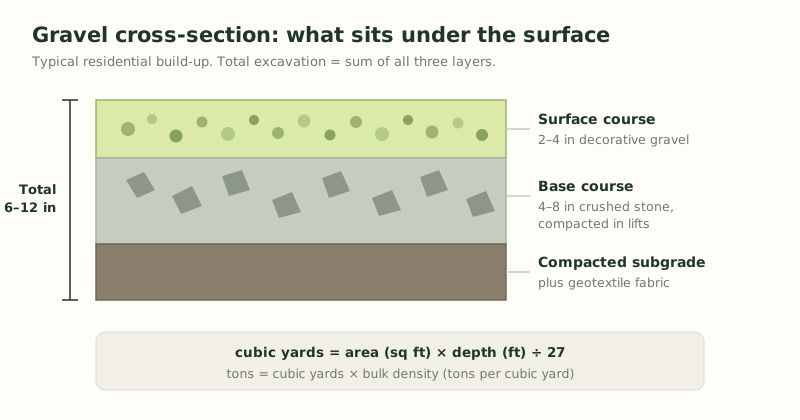
The aggregate quantity is only one part of a working French drain. Many designs use a compatible geotextile to separate drainage stone from surrounding soil while allowing water to enter. The trench may include a specified stone cover above the pipe and soil or landscape material above the wrapped stone zone. Enter only the portion filled with aggregate. The outlet must discharge safely by gravity or into an approved system; a trench with no effective outlet may simply store water. Cleanouts, catch basins, and transitions should remain accessible. These components can displace additional stone, so complex layouts benefit from a section-by-section material takeoff.
Walk the route and compare field measurements with the calculator one final time. Confirm that the width can be excavated consistently and that the depth allows the required pipe slope. Check the rounded order against truck capacity, supplier minimums, and staging space. Drainage stone is heavy, and moving it by hand from a distant drop location adds substantial labor. Arrange safe placement that will not block traffic, overload a weak surface, or contaminate clean stone with soil. Keep some allowance for small washouts or over-excavated sections, but avoid using a large waste factor to hide uncertain design dimensions.
Save the final measurements, stone product, supplier density, waste percentage, and delivered quantity with project photos. This record makes it easier to explain the estimate, compare the delivered amount with actual use, and plan future extensions or repairs. If substantial stone remains, note whether the trench dimensions changed during excavation before adjusting the calculator for another project.