This pea gravel calculator (also called a pea stone calculator) works out how much pea gravel a garden path, patio, play area, or border needs. Enter the area and depth to get cubic yards, tons, bag counts, and total cost.
This free online pea gravel calculator estimates rounded decorative gravel for paths, patios, borders, play areas, and landscaping.
01
What problem does the pea gravel calculator solve?
It converts project dimensions and finished depth into cubic yards and tons of pea gravel, including waste and optional delivery cost. This prevents shortages and makes bulk-versus-bag comparisons easier.
02
What inputs should you prepare?
Rectangle or circular project shape
Length and width, or diameter
Finished pea gravel depth
Waste allowance
Price per ton and delivery fee
03
How do you use it?
Choose US or metric units.
Enter the project measurements.
Use 2–3 inches for many landscape projects.
Set waste—10% is a common starting point.
Add supplier pricing if available.
04
How can you use the results?
Use the tonnage to request a bulk quote, the cubic-yard result when a landscape yard sells by volume, and the cost estimate for budgeting. For bags, divide the required weight by the weight shown on one bag.
05
When can the estimate be less accurate?
Results are less reliable on slopes, uneven ground, deep fills, structural drainage projects, or when local pea gravel has a different moisture level and density. Confirm large or safety-critical orders with a supplier.
06
How is it different from related calculators?
A general gravel calculator supports many aggregate densities. This pea gravel calculator starts with pea gravel density and depth guidance. A French drain calculator also subtracts pipe volume, while a paver calculator estimates compacted base and sand layers.
ToolBest forSpecial output
Pea gravelPaths & landscapesPea gravel tons
French drainDrain trenchesPipe deduction
Paver basePatios & walksBase + sand
DENSITY
Use your supplier's pea gravel density
The default is 1.35 short tons per cubic yard, equivalent to approximately 1,602 kg/m³. This is a planning value. Washed stone, moisture, particle size, and the amount of empty space between rounded stones can change the delivered bulk density. Select Custom material density to use a quarry or bag manufacturer's value.
VolumeArea × depthWeightVolume × densityFinal orderWeight plus waste allowance
Pea gravel conditionWhat to do
Supplier gives ton/yd³Enter it directly in US mode
Supplier gives kg/m³Switch to Metric mode
No density availableKeep the 1.35 ton/yd³ default
For large orders, ask the supplier whether the quoted density is loose, compacted, wet, or dry.
07
Common problems and quick fixes
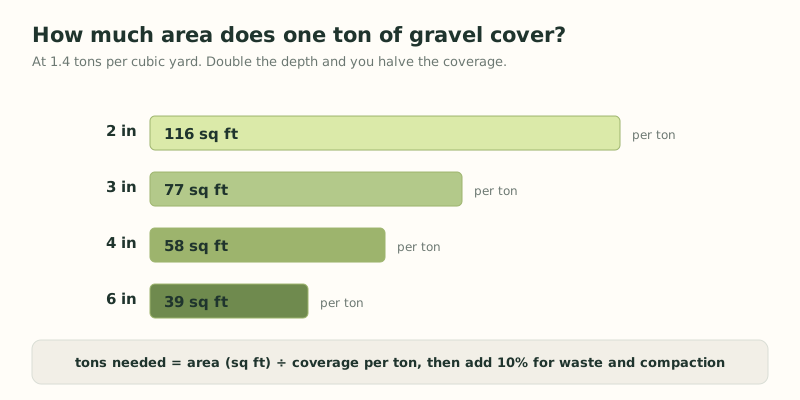
How much area does one ton cover?+
At 2 inches deep, one ton typically covers around 100 square feet. Density and moisture change actual coverage.
My project is irregular.+
Split it into rectangles or circles, calculate each part separately, and add the recorded quantities together.
Does pea gravel compact like crushed stone?+
No. Rounded stones shift and do not lock together like angular crushed stone. Use a suitable compacted base where stability matters.
Can I put it directly on soil?+
Preparing the base and installing suitable edging normally produces a longer-lasting result.
Pea gravel is slightly lighter at 1.3 tons per cubic yard, so it covers a little more area than shown here.
Understanding pea gravel coverage
Pea gravel is made of small, naturally rounded stones. Coverage depends on surface area, finished depth, bulk density, moisture, and how much the stones settle after installation. The pea gravel calculator first finds the volume of the project and then applies a typical pea gravel density to estimate weight. A shallow decorative layer covers more area per ton than a deep path or play area. The selected waste allowance adds a practical margin for minor measurement errors, settlement, spillage, and low spots. Since products from different quarries can vary in stone size and moisture, a local supplier may provide a slightly different tons-per-yard figure.
Where pea gravel works best
Pea gravel is popular for garden paths, dog runs, seating areas, landscape borders, fire-pit surrounds, and decorative drainage zones. Its rounded surface can be comfortable to walk on, and the open spaces between stones allow water to pass through. It is not automatically the best material for every base. Rounded stones do not interlock like angular crushed aggregate, so they can shift under wheels, furniture, or concentrated foot traffic. Good edging helps contain the material. For patios or paths that need a firm, stable surface, pea gravel is often installed over a prepared and compacted base rather than directly over soft soil.
Measuring and selecting depth
Measure the full finished area and divide irregular shapes into smaller rectangles or circles. Depth should describe the installed pea gravel layer only. Two inches is a common starting point for light landscape coverage, while some seating or path applications use two to three inches. Too little material may expose fabric or base after normal movement, while excessive depth can make walking and rolling equipment difficult. Play areas, drainage features, and accessibility-sensitive surfaces may require specific designs or approved products. Those projects should follow local guidance rather than relying on a general depth recommendation.
Ordering bulk pea gravel or bags
For larger projects, bulk delivery is usually priced by ton or cubic yard and can be more economical than individual bags. Ask the supplier about minimum loads, delivery access, material color, washed versus unwashed stone, and the density used for conversion. For a small border or repair, bags may be more convenient. Compare the calculator's required total weight with the weight printed on each bag and round up. Color and stone size can vary between batches, so ordering the full project quantity at once may produce a more consistent appearance. Recheck measurements before purchasing because returned bulk aggregate is rarely practical.
Preparing and containing pea gravel
Good preparation helps the calculated quantity perform as expected. Remove vegetation and loose organic soil, establish the planned grade, and correct low areas before spreading aggregate. Edging is especially important because rounded pea gravel migrates beyond the finished boundary more readily than angular stone. The edge should retain the selected depth without creating a trip hazard. Where separation fabric is appropriate, overlap and secure it according to product guidance. Fabric does not replace a stable base and should not block intended drainage. Spread material evenly and check depth in several locations instead of relying only on the appearance of the surface.
Maintaining a pea gravel surface
Pea gravel changes gradually as stones move, settle, and leave the area at entrances. Periodic raking restores an even layer and returns displaced material from edges. Leaves are easier to remove with a light blower setting or a landscape rake that does not pull up the base. Low spots may need a small top-up instead of a complete new order. Keeping the supplier and product details makes future color matching easier. If gravel repeatedly washes away, spreads into adjacent areas, or develops deep ruts, the cause is usually edging, slope, drainage, or base preparation rather than the original quantity estimate.