Free online tool • Bedding sand
Paver Sand Calculator
This paver sand calculator works out how much bedding sand — also called leveling sand — goes under a paver patio, walkway or driveway. Enter the paved area and the sand depth, usually 1 inch, and get bags, tons, cubic yards and cost.
How Much Paver Sand Do I Need?
What Paver Sand Does
Paver sand is the thin layer of coarse sand between the compacted gravel base and the pavers. It is not structural — the gravel base carries the load — but it gives every paver a flat, even seat and lets you adjust small variations in height. After the pavers are laid, a plate compactor vibrates them down into the sand so they lock together. A separate, finer polymeric joint sand then fills the gaps between pavers.
How Thick Should Paver Sand Be?
Screed paver sand to 1 inch for patios, walkways and driveways. That is the industry standard thickness for bedding sand under concrete pavers, and the paver sand calculator uses it by default. Natural flagstone, which varies in thickness, can need 1 to 2 inches.
Why more paver sand is not better
A thick sand layer shifts under load and lets pavers rock, rut and settle. If the base is too low, fix it with more compacted gravel, not extra sand. Sand thicker than about 1-1/2 inches under concrete pavers is a common reason patios develop dips.
Best Sand for Pavers
- Concrete sand — coarse, angular, washed sand. It drains well, holds a screeded line and is the standard paver sand.
- Bagged paver sand — the same kind of coarse sand in 50 lb bags; convenient for small patios but costly per ton.
- Stone dust — packs hard and is popular in some regions, but it holds water and can wash out, so most paver guides prefer concrete sand.
- Masonry sand — too fine and rounded to hold pavers firmly; better for mortar and filling joints.
How the Paver Sand Calculator Works
1. Paved area
Multiply length by width. For a 12 × 16 ft patio that is 192 sq ft. Subtract nothing for borders — edge restraints sit on the base, and the sand runs under the border pavers too.
2. Volume of paver sand
Multiply by the sand depth in feet: 192 × 1/12 = 16 cubic feet, or 0.59 cubic yards.
3. Tons and bags
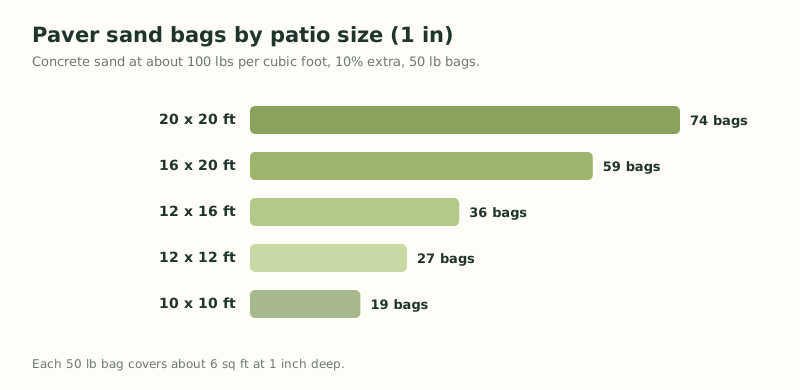
Concrete sand weighs about 100 lbs per cubic foot, so 16 cubic feet is 1,600 lbs. Add 10 percent for screeding loss and order about 0.9 tons, or 36 bags of 50 lb.
Paver Sand Quantity Chart
| Paver area | Cubic feet at 1 in | Tons of paver sand | 50 lb bags (with 10%) |
|---|---|---|---|
| 100 sq ft | 8.3 | 0.42 | 19 |
| 200 sq ft | 16.7 | 0.83 | 37 |
| 300 sq ft | 25.0 | 1.25 | 55 |
| 500 sq ft | 41.7 | 2.08 | 92 |
| 1,000 sq ft | 83.3 | 4.17 | 184 |
One ton of paver sand covers about 240 sq ft at 1 inch deep, and one cubic yard covers about 324 sq ft.
Paver Leveling Sand Tips
Lay two lengths of 1 inch electrical conduit or pipe on the compacted base as screed rails, spread the paver sand between them, and pull a straight board across the rails to strike it off flat. Remove the rails, fill the grooves with sand, and do not walk on the screeded paver sand before laying pavers. Keep the sand dry and covered if rain is forecast, as saturated sand will not compact evenly.
Paver Sand Cost
Bulk concrete sand costs about $30 to $50 per ton, while bagged paver sand runs $5 to $8 per 50 lb bag, or $200 to $320 per ton. For a 200 sq ft patio, that is roughly $35 of bulk sand plus delivery, or about $200 to $300 in bags. Most stone yards will put paver sand on the same truck as the gravel base, so order both together.
Related Sand Calculators
These tools use the same volume and density maths for neighbouring jobs:
- Polymeric sand calculator — joint sand between the pavers
- Paver base calculator — base gravel, sand, pavers and joint sand
- Sand and gravel calculator — base gravel and bedding sand together
- Sand calculator — any sand, any depth
- Gravel base calculator — the compacted base under the sand
- Patio gravel calculator — gravel patios and bases
Bedding sand thickness follows segmental paving practice; the Interlocking Concrete Pavement Institute publishes detailed paver installation guidelines.
Paver Sand FAQ
How much sand do I need for pavers?
Plan on 1 inch of bedding sand under concrete pavers. That is about 1 cubic foot of sand for every 12 sq ft, so a 12 by 16 ft patio needs 16 cubic feet, roughly 0.9 tons or 36 bags of 50 lb with 10 percent extra.
How many bags of paver sand do I need?
Each 50 lb bag of paver sand covers about 6 sq ft at 1 inch deep. Divide the patio area by 6 and add 10 percent: a 10 by 10 ft patio needs about 19 bags.
How thick should sand be under pavers?
One inch, screeded flat. Thicker bedding sand lets pavers shift and settle, so make up height with more compacted gravel base rather than more sand.
What kind of sand goes under pavers?
Coarse, washed concrete sand is the standard paver sand because it drains and holds a screeded surface. Fine masonry sand and play sand are too soft and rounded to hold pavers firmly.
How much area does a ton of paver sand cover?
About 240 sq ft at 1 inch deep. A cubic yard of paver sand covers roughly 324 sq ft at the same depth.