Free online tool • Compaction included
Gravel Base Calculator
This gravel base calculator works out how much compacted gravel base goes under a patio, paver walkway, shed, concrete slab or driveway. Pick the project for a recommended base depth, enter the area, and get tons, cubic yards, bags and cost with a compaction allowance already included.
How Much Gravel Base Do I Need?
What a Gravel Base Does
A gravel base is the compacted layer of stone that sits between the soil and whatever you build on top — pavers, a concrete slab, a shed floor or driveway gravel. It spreads the load so the surface does not sink, gives water a path away from the surface, and stops frost from heaving the soil underneath. Most failed patios and sunken shed floors trace back to a gravel base that was too thin or never compacted.
Gravel Base Depth by Project
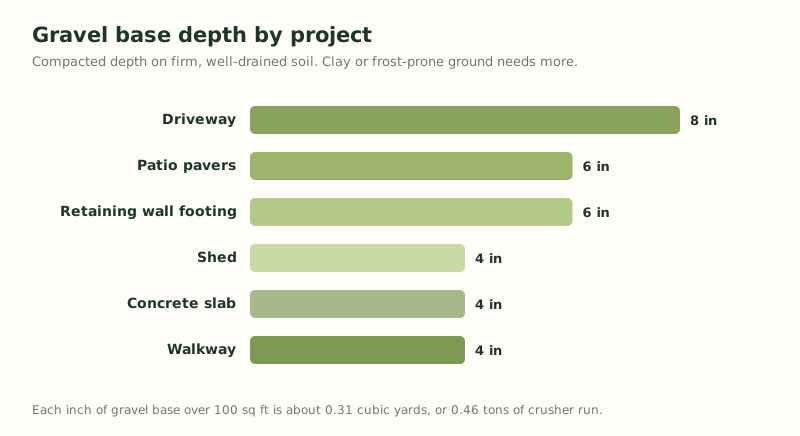
The gravel base calculator fills in a recommended depth when you pick a project. These are compacted depths on firm, well-drained soil:
| Project | Gravel base depth | Best base material |
|---|---|---|
| Patio pavers (foot traffic) | 4–6 in | Crusher run or paver base |
| Paver driveway | 8–12 in | Road base or crusher run |
| Concrete slab | 4 in | 3/4 minus or #57 stone |
| Shed | 4–6 in | Crusher run |
| Walkway | 4 in | Crusher run or 3/4 minus |
| Gravel driveway | 6–8 in base + 2–3 in surface | Crusher run, then clean stone |
| Retaining wall footing | 6 in | 3/4 minus or crusher run |
Add 2 to 4 inches on clay soil, and more in cold climates where the frost line is deep. If the soil stays wet, lay geotextile fabric under the gravel base so the stone does not migrate into the mud.
Best Gravel Base Materials
Crusher run and road base
Dense-graded mixes of angular stone from about 3/4 inch down to dust. The fines fill every gap, so under a plate compactor they lock into a hard, almost concrete-like gravel base. This is the default choice for patios, sheds and driveways, at about 1.50 tons per cubic yard.
3/4 minus
The regional name, common in the West and Pacific Northwest, for a dense-graded 3/4 inch base with fines. It behaves like crusher run.
#57 stone
Clean, open-graded 3/4 inch stone. It does not compact into a solid layer but drains instantly, which is why it is often chosen as the gravel base under concrete slabs and permeable pavers.
Recycled concrete
Crushed concrete graded like crusher run. About a third cheaper and nearly as strong, though lighter at roughly 1.30 tons per cubic yard.
How the Gravel Base Calculator Works
1. Measure the area plus a margin
Extend the gravel base 6 to 12 inches past the finished edge on every side so the edges of the patio or slab are supported. A 12 × 16 ft patio with a 6 inch margin becomes 13 × 17 ft, or 221 sq ft.
2. Volume
Multiply by the compacted depth in feet and divide by 27. At 6 inches: 221 × 0.5 ÷ 27 = 4.1 cubic yards.
3. Tons with compaction
Multiply by the density — 1.50 for crusher run — to get 6.1 tons, then add 15 percent because a dense-graded gravel base loses 15 to 25 percent of its loose depth when compacted. Order about 7 tons.
Gravel Base Tons per 100 Square Feet
A quick reference for crusher run or road base at 1.50 tons per cubic yard, before the compaction allowance:
| Base depth | Cubic yards per 100 sq ft | Tons per 100 sq ft |
|---|---|---|
| 2 in | 0.62 | 0.93 |
| 4 in | 1.23 | 1.85 |
| 6 in | 1.85 | 2.78 |
| 8 in | 2.47 | 3.70 |
| 12 in | 3.70 | 5.56 |
Compacting a Gravel Base
Spread the gravel base in lifts no thicker than 2 to 3 inches, dampen each lift lightly, and run a plate compactor over it two or three times before adding the next. A single 6 inch lift compacts only at the top and settles later. Slope the finished gravel base about 1/8 inch per foot away from buildings so water drains off rather than pooling under the surface.
Related Gravel Calculators
These tools use the same volume and density maths for neighbouring jobs:
- Paver base calculator — base gravel plus bedding sand and pavers
- Gravel under concrete slab calculator — sub-base for slabs with edge overhang
- Shed base gravel calculator — pads sized to standard sheds
- Crusher run calculator — the most common base material
- 3/4 gravel calculator — clean 3/4 stone and 3/4 minus
- How deep should gravel be? — depth guidance for surfaces and bases
Base depth guidance reflects common residential practice; the American Concrete Institute publishes the slab-on-ground guides that most specifications for slab sub-bases follow.
Gravel Base FAQ
How thick should a gravel base be?
Use 4 inches of compacted gravel base under walkways, sheds and concrete slabs, 4 to 6 inches under patio pavers, and 8 to 12 inches under driveways. Add 2 to 4 inches on clay soil or where frost heave is a problem.
What is the best gravel for a base?
Crusher run, road base or 3/4 minus are best because their fines compact into a solid layer. Clean #57 stone is used where drainage matters more than compaction, such as under concrete slabs and permeable pavers.
How much gravel base do I need for a 12x12 area?
A 12 by 12 ft area at 4 inches deep is 1.78 cubic yards, or about 2.7 tons of crusher run. With a 15 percent compaction allowance, order about 3.1 tons.
How much does gravel base compact?
Dense-graded gravel base such as crusher run loses about 15 to 25 percent of its loose depth when compacted, so order 15 percent extra. Clean stone like #57 compacts only about 5 to 10 percent.
Do I need fabric under a gravel base?
On firm, well-drained soil it is optional. On clay or wet soil, geotextile fabric under the gravel base stops the stone from sinking into the soil and keeps the base at full depth for much longer.